top of page
There is a famous quote that states - "If you are not part of the solution, you are part of the problem." - but in this case, if you are not part of the solution, you will fall victim to the problem.
AI Data Centers:
Hijacking the Midwest's
Power Grid


Utilities are rerouting your power to fuel AI giants. In the heartland, farms and factories will pay the price first—blackouts, bill spikes, and forced shutdowns looming as supply dwindles. Don't wait for the crisis and secure your independence now.
This isn't abstract—it's a direct threat to agriculture and businesses.
U.S. electricity supply must balloon by at least 382 TWh annually by 2030 to feed data centers alone—equivalent to adding the output of 100 new nuclear plants—yet current projections show only half that capacity in the pipeline, dooming the grid to chronic shortages and forced rationing for everyday users.

AI Data Centers will Starve the Grid
The current grid was built for slow, <1% growth annually, yet the are projecting a need for >5%...
If that happens... the grid breaks
In MISO territory (covering IA, MN, ND, SD, etc.), data centers could hijack 20-30% of new supply growth by 2030, forcing utilities to hike rates 15-25% and prioritize AI over all other industries.
AI Data Centers can easily afford to pay more for power...
Can you?
There are several expansions and new data centers earmarked for the Midwest.
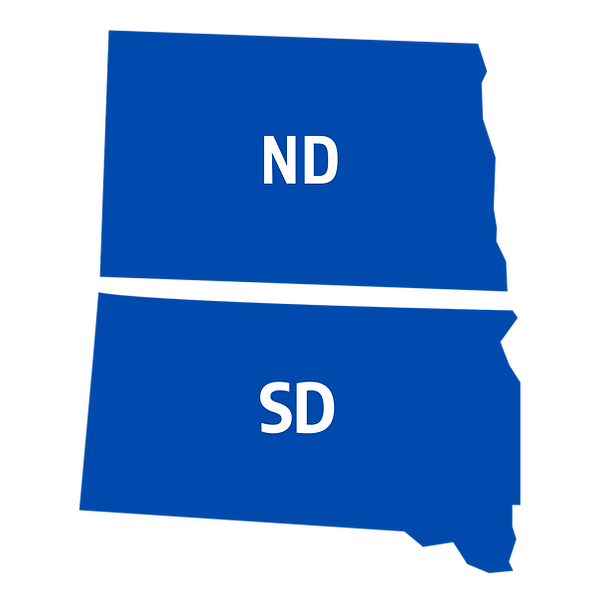
North Dakota will require an increase of 10%+ in supply.
Utilities in ND are warning against rural grid overload; forecasting 20% capacity shortfalls by 2030.
Data Centers in SD will use nearly 15% of the state supply.
This will result in shortages during winter peak months, hitting the agriculture industry hard.


Data centers in Iowa may consume 18% more power by 2030, rationing supply and risking $500M in loses to the Ag industry.
Proposed hyper-scale data centers could gobble up as much electricity as every home in Minnesota combined.
With data centers outpacing infrastructure builds, Missouri faces chaotic delays and acute shortages that could paralyze the economy and expose the state to prolonged outages.
Data center influxes are already congesting Minnesota's grids, blocking new connections for essentials like hospitals and farms while driving up rates by 20-30% for ordinary users.
Illinois' data center frenzy could suck up 20 GW of power—enough to light up Chicago twice over—triggering rolling blackouts that impact, farms, and homes by 2027.
Illinois’ AI data centers could spike demand by 20-30%, risking widespread blackouts and pushing electricity bills up 25-35% to finance $5-7 billion in grid upgrades to prevent Chicago and rural outages by 2030.
Ratepayers will be hit by 25-35% bill increases to fund $4-6 billion in emergency grid reinforcements by 2030.
Overwhelmed local grids from data center loads could cause frequent outages, potentially doubling rural electricity rates as Iowa scrambles to fund $2 billion in rushed infrastructure fixes.
Data centers potentially consuming 12% of U.S. power by 2028 could trigger chronic Kansas blackouts, forcing a 50% rate surge to cover $2-4 billion in fossil fuel expansions and derailing renewable goals.
Nebraska’s unique public power model (all utilities publicly owned) ensures low electricity rates (among the nation’s cheapest), but its heavy reliance on coal (~40-50% of generation) and nuclear (~20-30%) makes it vulnerable to data center-driven demand spikes.
The state’s rural grid and limited spare capacity amplify risks of outages and cost increases
Nearly 40 massive projects (>200 MW each) are in the pipeline across the region, overwhelming grids designed for steady, not explosive, growth. Here's a state-by-state breakdown of proposed builds and their projected energy bite (based on 2025 filings and forecasts; each 100 MW center can draw as much as 80,000 homes).

bottom of page